The U.S. Dollar, 5 year ARM vs 30 year conventional & the snow ball effect.

The U.S. Dollar, 5 year ARM vs 30 year conventional & the snow ball effect.

Real Estate Broker · Johns Creek, GA · Member since 2009 · 870 posts · 664 votes

I've been reading @Mark Ferguson's website and been thinking about his loan strategy of taking out 5 year ARMs and focusing on paying off the mortgage within 5 years. I know other buy and hold investors in Biggerpockets have followed the same strategy of accelerating mortgage payments.

Here is why i personally struggle with this strategy. What if an investor has a million dollar mortgage locked in at 4% for 30 years spread about among 8 SFRs. Let's also say that this investor also has $750,000 in cash in the bank. Would it be wise for this investor to pay off $750,000 of his million dollar mortgage and just live off of his $8000/month passive income?

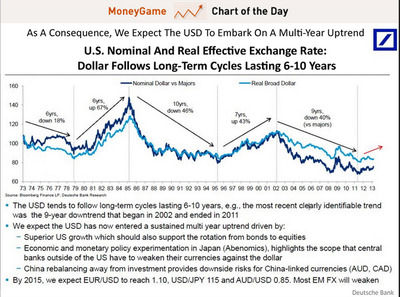
I feel that the downward cycle of the U.S. dollar has reversed in 2011 and is it in its early stages of its 6-7 year cycle making the dollar more valuable in the near future. If rates continues rise and CDs pay 5% like they did in 2007, aren't you in fact beating the bank at this point for any return over 4% on your cash? If your million dollar mortgage on your 8 SFRs rentals are fixed at 4% and in 2016, 30 years mortgage rates are at 7%. Wouldn't you keep the 30 year mortgage as long as you can and never pay more than you have to?

At the same time, I know that inflation is what makes a real estate buy-and-hold investor rich over time.

I am just not sure if having 75% of networth in real estate is right strategy, but i know that this allocation may be very common for many investor here on BP with 75% of their networth in real estate and perhaps 10% in cash. What are your thoughts? Perhaps is no right or wrong answer and varies by each individual's risk tolerance.

1Reply
17 views

Most Popular Reply

Joel OwensBusiness Member
Moderator
Real Estate Broker · Canton, GA · Member since 2010 · 15k+ posts · 11k+ votes
12y

Yeah I have never been big on stocks.

People always say diversify. Okay buy multiple niches within real estate. There are plenty of areas to make up a percentage portfolio with.

Different niches cycle at different times.

If you buy right with real estate and hold long term odds are in your favor.

See this reply in the discussion

6 Replies

Jump to latestLatest
  • Mark S.Pro Member
    Rental Property Investor · KY · Member since 2013 · 1k+ posts · 537 votes
    12y
    I think it depends, like you said, on the individual's goals. In your example of a 5% CD versus a 4% fixed mortgage, one needs to factor in the after-tax return of that 5%, which, after taxes, will be less than 5%. I suppose someone could make the same argument for tax deductibility of interest in a home (although, that's for primary residence; not sure if that applies for investment real estate). I think responsible use of leverage can be a great thing, but liquidity also has value. In most cases, a mixture is almost certainly appropriate.
  • Real Estate Broker · Johns Creek, GA · Member since 2009 · 870 posts · 664 votes
    12y

    Good points on the taxes Mark.

    One observation that i did find interesting among SFR buy and holders who are multi-millionaires is that a very small percentage of their networth is allocated to the stock market. Very small like 5%.

    I ask them why they invest so little in the stock market and their common answer is, "I have control over my real estate, but i have no control over the stock market. I get tax benefits with real estate, but i don't get any tax benefits with stocks."

  • Real Estate Investor · Boston, MA · Member since 2013 · 108 posts · 71 votes
    12y
    Seems like you're asking two separate questions...first, is borrowing (or leaving financing place) at a long term fixed rate a good strategy right now? I think YES. If the long term rate of inflation is 2-3% (and the Fed has taken extraordinary measures in recent times to try and induce that), and you're locked in at 4.0%, you're borrowing money at an effective rate of 1-2%. If you believe (as you seem to, and I do as well), that we'll see higher than targeted inflation over the next several years, then it seems like a no-brainer to leave in place your fixed rate financing, as you'll be borrowing at or below the rate of inflation for some period (free money!). All while enjoying rising rental rates and property values. Then, if I'm the hypothetical guy with the $750k, and I've decided (as above) that I like the long term fixed rate leverage play, then I have to ask myself, do I continue to allocate dollars to RE investments, or do I diversify? I have an undergrad degree in finance and worked in the mutual fund industry earlier in my career. Now I'm in real estate (day job and personal investing) and my wife is a financial advisor. We have some interesting "conversations" about what we'd do with my 401k rollover if I leave my day job. Even with (actually, probably DUE TO) my earlier experience with the stock market I'm all about a checkbook SDIRA....she'd love to get it all into the stock market but the thought of that literally makes me sick to my stomach!
  • Joel OwensBusiness Member
    Moderator
    Real Estate Broker · Canton, GA · Member since 2010 · 15k+ posts · 11k+ votes
    12y

    Yeah I have never been big on stocks.

    People always say diversify. Okay buy multiple niches within real estate. There are plenty of areas to make up a percentage portfolio with.

    Different niches cycle at different times.

    If you buy right with real estate and hold long term odds are in your favor.

  • Lender · Bellevue WA & Orange County, CA · Member since 2013 · 2k+ posts · 1k+ votes
    12y

    HI James those are some great points and I sometimes bring up those as options for borrowers who ask me how to use ARM's. I like to review and learn different philosophies on how to mitigate risk and maximize the upside when utilizing ARM's and other mortgage products.

    The problem I see with trying to payoff your ARM's would be the liquidity, use, and control (LUC) of your money which would be severely hampered especially if you're doing contingency planning for retirement, life style cash flow, disability, etc. In order to meet the debt free deadline at the end of 5 years of the ARM you'd have to reallocate huge amounts of dollars to principal reduction and another cost not factored in is the opportunity cost of that money being contributed to real estate equity which is very illiquid. A lot of banks limit their lines of credit to 350-400k per social or a specific amount of financed properties to limit their risk exposure so it will be hard to reaccess those funds from the free and clear properties in an emergency assuming you are able to maintain sufficient credit and reported income through out the emergency as well. If you're able to obtain the HELOC's for contingency planning purposes the terms are usually not fixed and they can still freeze or modify their line with out notice in the past.

    By dropping 750k into a 1 million dollar 4% fixed rate mortgage you wont be able to lower the monthly payment unless the mortgage servicer has an option to do a recast that allows you to reamortize the remaining balance over the life of the loan so you can effectively lower your monthly payment/debt service and thereby increase your cash flow from the rentals.

  • Real Estate Investor · Member since 2013 · 866 posts · 487 votes
    12y
    Originally posted by @James Park:

    Yes, the value of the dollar is cyclical, but as that chart shows the overall trend is still DOWN.

    The US dollar has lost over 96% of its buying power over the last century. That means most of the population most likely has less buying power sitting in their checking accounts than their grandfather carried in his pockets.

    Sobering, huh?

Join the conversationCreate a free account to reply, vote on answers and follow this thread.