Attic furnace - Is there something I can do here?

Attic furnace - Is there something I can do here?

Jeff SchemmelBusiness Member
Real Estate Agent · Saint Paul, MN · Member since 2014 · 384 posts · 401 votes

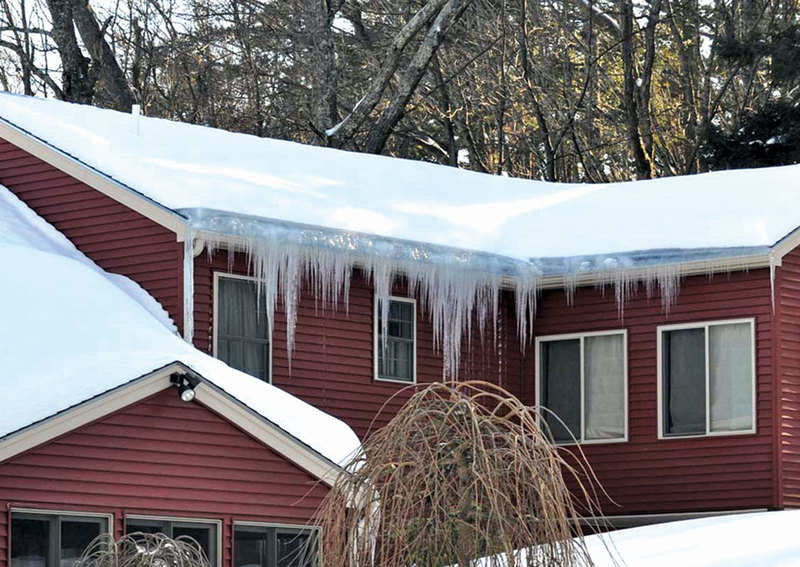
I have an up/down duplex in St. Paul, the upper unit's furnace is in the attic, and blows air down through the ceiling.  It's tucked under the corner of the south side of my roof as you can see in the photo.  This is causing a few things to happen, leading to ice build-up, drooping gutters, and water in my basement in the dead of winter.  It should be noted, this property was built in 1905, so there's a limestone foundation - water in the basement is fairly common and I can probably trace lines on the floor exactly where the water always flows.  Historically it hasn't been an issue but large snow melts exacerbate this and are causing water to pool around the base of my two electric water heaters.

Basically, the sun heats up the snow on the shingles, snow melts really fast and creates what is basically heavy rainfall down the south slope of my house, catches my gutters (which are full of snow/ice, and water pools over the side like a waterfall, coming down and creating a slushy/icy spot, causing water to freeze to the siding and create a large pocket of ice along the side of the house.  It's been warm the last few days and instead of staying ice it was all slush and the ground soaked up the water and it all went into my basement.  I've got dehumidifiers running to try and clear it up as quickly as possible.

The big question: what can I do to stop this? There's nothing else in the attic, except blow insulation, and the furnace is fully-wrapped and insulated.  A thought I had was to pay an HVAC contractor to shift the furnace to the center of the room, but it's directly over the intake, which is currently in the living room.  I'm not sure if that would even help.  Anyone with experience here?

3Reply
138 views

Most Popular Reply

Investor · Rochester, NY · Member since 2016 · 576 posts · 358 votes
4y

I have recommended (and I understand that it worked) to glue 1" styrofoam insulation to the underside of the roof above the furnace. That keeps the snow from melting and  re-freezing. Also build walls with 2x4 studs (and a door) around the furnace and insulate the walls with 3 1/2" fiberglass. No wall board needed. This should keep heat from escaping to other parts of the attic. The styrofoam can stay exposed because the attic is not a habitable part of the house. Furnaces should always be within the heated envelope of the house. This must have been a retrofit heating work-around. Would have been better to locate the furnace in the basement and run a main trunk up to the attic through some closet or corner of the house. The insulated duct in the attic would still have some heat loss, but not like what you are experiencing. 

See this reply in the discussion

21 Replies

Jump to latestLatest
  • Lender · Washington DC · Member since 2015 · 2k+ posts · 2k+ votes
    4y

    Need photo of exterior, grading on that side, distance of clearance to property line, slope. Solution may be to route the melted water away.

  • John UnderwoodPro Member
    Investor · Greer, SC · Member since 2014 · 13k+ posts · 17k+ votes
    4y

    Maybe install French drains around house to allow water to drain away from house.

  • Jeff SchemmelBusiness Member
    OP
    Real Estate Agent · Saint Paul, MN · Member since 2014 · 384 posts · 401 votes
    4y

    in the 1st photo, this is the area where the water is hitting the ground.  the siding doesn't reveal the foundation on this side, which is not typical.  It also does have a slight negative grade towards the house which definitely isn't helping here.  In the su

    2nd photo (see bottom right) is the location where this happens, from another angle.  but I wanted to show it for added context.

  • Rental Property Investor · IL · Member since 2015 · 165 posts · 107 votes
    4y

    Sounds like this would happen regardless of the furnace location (although I'm sure the heat of the furnace certainly doesn't help). The sun is going to melt the snow as you've mentioned. Have you considered installing gutter heat-trace cables? You can have them installed in a "wave" pattern along the bottom portion of the sloped roof near the gutter, then inside the length of the gutter, as well as down the length of the down-spout. The purpose is not to completely melt all the snow and ice, but rather to create a path for water to flow. If you don't have the same issue during warm months when it rains, then it's the ice-damming that is the problem you should be trying to solve.

    Source: I had this same issue here in Chicago winters and resolved it by installing heat trace cables.

  • Jeff SchemmelBusiness Member
    OP
    Real Estate Agent · Saint Paul, MN · Member since 2014 · 384 posts · 401 votes
    4y

    @Russell W. thanks, I wasn't aware of this.  I think i'm going to run the downspout to the front of the house, do some french drain as @John Underwood recommended and look into this heat-trace cabling.  the trifecta should help even in the summer rains.  Thanks very much for the feedback!

  • Nathan GesnerBusiness Member
    Moderator
    Real Estate Broker · Cody, WY · Member since 2010 · 28k+ posts · 41k+ votes
    4y

    I would also recommend a french drain to route the water away from the basement.

    The DIY Landlord Book4.7243 Reviews
  • New to Real Estate · Oak Lawn, IL · Member since 2021 · 31 posts · 13 votes
    4y

    @Jeff Schemmel to add to the list of things people are recommending for you to do I would add the following:

    1) Oversized gutters and down spouts. This will give you some extra space in there to help prevent the freeze/thaw cycle if used in conjunction with the heat cord. If you're going to go through the effort to install a French drain, tying the down spouts into the drain will be a huge win. 

    2) Look at your roofing ventilation. Its hard to tell from the pictures, but I would guess that your roof has the standard box/turtle vents on them. If your soffits don't have adequate intake as well as your roof not having adequate exhaust, you will get ice dams as well from that alone. Add the heat from the furnace and your freeze/thaw cycle is going to be insane as you are already experiencing. I would suggest making sure the soffits are breathing, the insulation is not blown into the soffits, and that you have ample exhaust. If you don't have enough exhaust, I HIGHLY recommend ridge vent.


    Hope this helps. 

  • Jeff SchemmelBusiness Member
    OP
    Real Estate Agent · Saint Paul, MN · Member since 2014 · 384 posts · 401 votes
    4y

    @Wade Germann this is big. Thanks for the lesson, here. I'll need to check on the soffit from the inside, because all looks OK from outside. There's a good possibility the blown insulation could be covering it. Can you explain an ice dam for me? How do I know it when I see it

  • Investor · Rochester, NY · Member since 2016 · 576 posts · 358 votes
    4y

    I have recommended (and I understand that it worked) to glue 1" styrofoam insulation to the underside of the roof above the furnace. That keeps the snow from melting and  re-freezing. Also build walls with 2x4 studs (and a door) around the furnace and insulate the walls with 3 1/2" fiberglass. No wall board needed. This should keep heat from escaping to other parts of the attic. The styrofoam can stay exposed because the attic is not a habitable part of the house. Furnaces should always be within the heated envelope of the house. This must have been a retrofit heating work-around. Would have been better to locate the furnace in the basement and run a main trunk up to the attic through some closet or corner of the house. The insulated duct in the attic would still have some heat loss, but not like what you are experiencing. 

  • New to Real Estate · Oak Lawn, IL · Member since 2021 · 31 posts · 13 votes
    4y

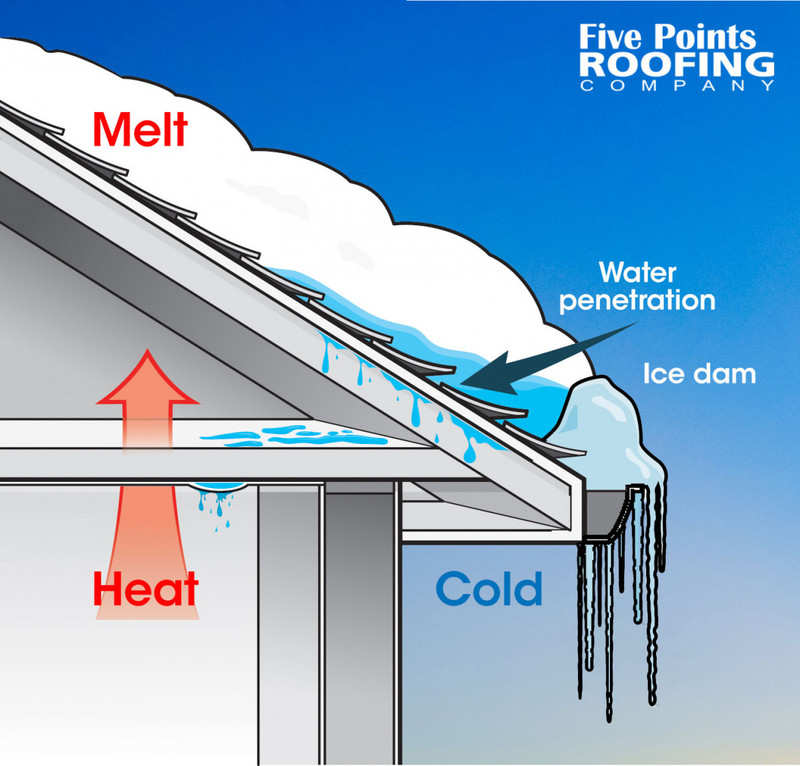
    @Jeff Schemmel so ice daming is when there is a heat thaw cycle outside, or your house heat is escaping into the attic, and the snow on your roof melts during the day then freezes at night in your gutters. After a couple of days of this you will have ice that is creeping up your roof and the water is making its way under the shingles. If you dont have ice and water shield under the shingles it will damage your decking on the roof. The easiest way to tell if you have an ice dam is if you have really large icicles hanging from your gutter line. I dont know what code calls for when it comes to ice and water shield in Saint Paul, but here in Chicago Land we do it 3 feet past the heated wall to help prevent any damage.

    The important part of your roof breathing is that it will help prevent this from happening. The attic should be drawing enough air in from the soffits to keep the temperatures relatively cool up there. Typically it should be only a couple of degrees warmer than outside. Additionally having enough ventilation to keep the air moving out the top of the roof is also important. Thats why I suggest the ridge vent, because it will give your attic the most ventilation it can based off how much ridge you have. 

    The attached pictures are as follows:

    1) Really bad ice daming.

    2) Ice damning theory. This happened to me last winter. It sucked.

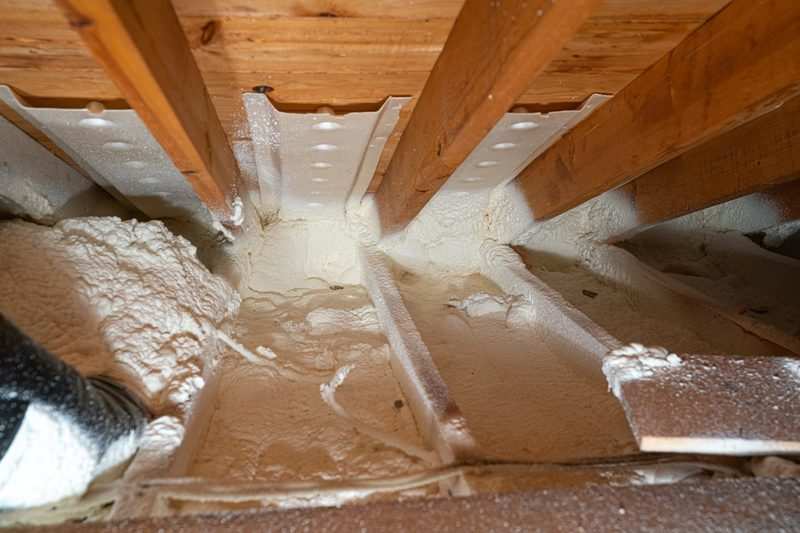
    3) This is a foam channel that can be stapled to the underside of your decking that will butt up to the soffit leaving a path for the air to flow into the attic. With this item the insulation can be blown in and you wont have to worry about it blocking the air flow. 

    If you need anything else, feel free to reach out. 

  • Rental Property Investor · Concord, GA · Member since 2015 · 3k+ posts · 3k+ votes
    4y

    I agree that your problem is probably primarily lack of ventilation in the attic. The attic should be cold above the insulation. heat cables do work but they are pretty expensive to operate (electricity wise)

  • Jeff SchemmelBusiness Member
    OP
    Real Estate Agent · Saint Paul, MN · Member since 2014 · 384 posts · 401 votes
    4y

    @Wade Germann you're the man, thank you so much for this.  Sorry to hear you learned the hard way, my friend.  I will definitely be making some changes and modifying my fall "pre-winter inspection" list.

  • Investor · Rochester, NY · Member since 2016 · 576 posts · 358 votes
    4y

    The 'normal' methods of ventilation and insulation mentioned above work pretty well for many attics. However, you have a furnace in your attic. This makes your situation not normal. I very much doubt that correcting your ventilation and improving your insulation between the living space below and the attic will solve your problem. (It may help.) That furnace, even though it's got insulation around it, is putting a lot of heat into what is supposed to be an unheated space. I'm convinced, that even with ventilation, the heat from that furnace has to go somewhere. It's going to go up. Up to the roof deck, through the roof deck, to the snow and melt the snow.

    Wish you well.

  • Jeff SchemmelBusiness Member
    OP
    Real Estate Agent · Saint Paul, MN · Member since 2014 · 384 posts · 401 votes
    4y

    @Carini Rochester makes sense.  I may get a quote for re-locating the furnace to the basement - there's plenty of room, but i imagine that's quite expensive.  The unit stays pretty warm so as long as it's not creating terrible long-term issues i'm fine just taking mitigating measures for now.

  • Investor · Chicago, IL · Member since 2018 · 352 posts · 176 votes
    4y

    @Jeff Schemmel Can't do much about the sun but if your attic is getting hot you should consider venting it better, the heat from the inside may be melting the ice + exacerbating your problem. Another thing you can do is scrape down your roof after a huge snowfall. Annoying but then again we usually only get monster snowfalls 2-3 times a year.

  • Rental Property Investor · Concord, GA · Member since 2015 · 3k+ posts · 3k+ votes
    4y
    Originally posted by @Carini Rochester:

    I have recommended (and I understand that it worked) to glue 1" styrofoam insulation to the underside of the roof above the furnace. That keeps the snow from melting and  re-freezing. Also build walls with 2x4 studs (and a door) around the furnace and insulate the walls with 3 1/2" fiberglass. No wall board needed. This should keep heat from escaping to other parts of the attic. The styrofoam can stay exposed because the attic is not a habitable part of the house. Furnaces should always be within the heated envelope of the house. This must have been a retrofit heating work-around. Would have been better to locate the furnace in the basement and run a main trunk up to the attic through some closet or corner of the house. The insulated duct in the attic would still have some heat loss, but not like what you are experiencing.

    Out of 17 properties we own, only two have the furnace within the heated envelope of the house. Attics and crawl spaces are a frequent location. It may vary in your area.

  • Jeff SchemmelBusiness Member
    OP
    Real Estate Agent · Saint Paul, MN · Member since 2014 · 384 posts · 401 votes
    4y

    @John Teachout Thanks for stopping to mention this.  I haven't seen much of it, but I know of other properties with this arrangement.  I don't think it should stop someone from buying a house, but this thread has been educational on what else I will look for when viewing a property like this in the future.

  • Investor · Rochester, NY · Member since 2016 · 576 posts · 358 votes
    4y

    @John Teachout I'm sure it varies by climate. My area in New York State gets a lot of snow, and therefore ice damming if we don't take steps to keep the attic cold. Probably not as big a concern in your area. Probably a bigger problem in the Twin Cities even than here. 

  • Pomona, NY · Member since 2016 · 375 posts · 217 votes
    4y

    @Jeff Schemmel what you have is completely normal in terms of the furnace, you have force air, sometimes it's in the basment sometimes its in the attic, the ice build up in the gutters is called ice damns, with out seeing the attic in person or better pictures it will be hard to say what exactly is causing the issue. I would start tho with increasing the insulation in the attic, depending on the type you have in they're now how deep it is you may need to add more, because you have no soffit from what I can tell means you have little to no ventilation in the attic so you may need to add roof vents to circulate the air. With the water getting into the basment, 1st pipe you leader drains several feet away from the foundation, make certain the grade is in no way pitched to the house. Depending on when the house was built you may or may not have footing drains, and the exterior walls may need to be sealed to stop and ground water from penetrating the walls.

  • Pomona, NY · Member since 2016 · 375 posts · 217 votes
    4y

    @Jeff Schemmel also install larger gutters, the roof is steep and by having no soffits its going to be very difficult with keeping the water away from the house, also your siding is wayyyyyy to close to finished grade that's how you invite carpenter ants and termites

  • Jeff SchemmelBusiness Member
    OP
    Real Estate Agent · Saint Paul, MN · Member since 2014 · 384 posts · 401 votes
    4y

    @Michael Gessner yeah fair points.  I don't think termites are a common thing here, but I do get boxelder bugs sometimes.  I think the issue is the foundation ends just above grade so the siding is there out of necessity at this point since it's a pretty old house.  I probably won't do anything about it, although you're certainly right it's not ideal.

Join the conversationCreate a free account to reply, vote on answers and follow this thread.